
Entries in Trade Dress (53)
Western District Finds Glassybaby's Trade Dress is Generic
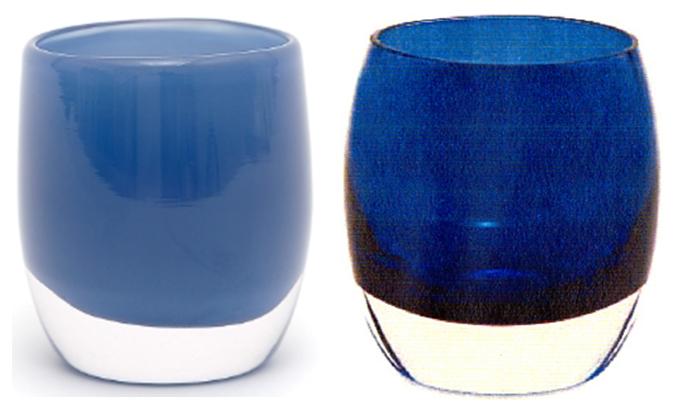 Generic! The Western District finds Glassybaby’s
design (left) is incapable of functioning as a trademark
Glassybaby’s popular votive candle holder design is generic.
The Western District made that finding on Sept. 30, granting the motion for summary judgment that defendant Provide Gifts, Inc., d/b/a Red Envelope, brought attacking Glassybaby, LLC’s trade dress claim.
Western District Judge Marsha Pechman previously had dismissed the Seattle company’s complaint against the defendant sellers and manufacturers of competing votive designs for failing to describe its claimed trade dress. (STL post here.) After allowing Glassybaby to amend its complaint, the court found the company wrongly relied on the Patent and Trademark Office’s conclusion that Glassybaby’s trade dress was not generic.
“Glassybaby’s trade dress is generic and incapable of trademark protection. The mark describes the rough dimensions of a round glass container with convex sides, a thick, clear base, and a wide top. The mark only answers the question ‘what-are-you’ not ‘who-are-you.’ It gives no indication of the source and merely describes on particular species of the genus of round containers. Permitting trade dress protection for this item would also unnecessarily grant Glassybaby protection over a broad number and types of small, round containers, which runs contrary to the principles behind extending Lanham Act protection to trade dress. This is similar to the outcome in a case before the Second Circuit, relied on by Defendants: Jeffrey Milstein, Inc. v. Gregor, Lawlor, Roth, Inc., 58 F.3d 27 (2d Cir. 1995). The court there found die-cut greeting cards cut in the outline of color photographs of an animal, person, or object were generic because the product design only described a species of a genus, not a source-identifying trade dress. Here, with even less concrete detail of the product, nothing about the unregistered trademark identifies the source of what is simply a type of round, glass container approximately 3.75 inches high and 2.5 inches wide. This is simply a species of the genus of round containers and is generic as a matter of law.
“Glassybaby has not raised any dispute of material fact showing that its trade dress is not generic. Glassybaby primarily relies on the PTO’s finding that the unregistered trade dress is not generic. Yet, nowhere has Glassybaby explained why the Court is bound by that determination. At best, in a direct appeal from the PTO, which this is not, the Court reviews the PTO’s findings for substantial evidence. Here, the PTO’s finding is not supported by substantial evidence and fails to consider or apply the relevant authority. The PTO merely concluded that ‘products that combine the curved sides and thick, clear base with the specified dimensions [presented by Glassybaby] do not appear to be so commonly available for sale as to support a finding that the mark is generic.’ The PTO does not strictly apply the legal test for genericness or explain why the number of similarly sized and shaped votives impacts the determination of genericness. The PTO’s conclusion is at odds with Ninth Circuit law. A trade dress for a product design that answers only the ‘what-is-it’ question is generic. The Court is convinced Glassybaby cannot pass this test with its trade dress, regardless of whether there [are] abundant or few similarly sized and shaped glass containers. The PTO’s finding does not suffice to raise a genuine issue of fact.”
The court dismissed Glassybaby’s claims for dilution and violation of the Consumer Protection Act for the same reasons.
The court’s finding could have a big impact on Glassybaby. Its conclusion that the company’s product design is incapable of protection would seem to allow competitors — under trademark principles at least — to copy Glassybaby’s trendy design without liability.
The New York Times last week coincidentally featured Glassybaby’s challenges in breaking into the New York market. The company may face an even more significant challenge following the court’s order.
The case cite is Glassybaby, LLC v. Provide Gifts, Inc., No. 11-380 (W.D. Wash. Sept. 30, 2011) (Pechman, J.).
 Michael Atkins
in Seattle Updates, Trade Dress, Trademark Infringement
|
Michael Atkins
in Seattle Updates, Trade Dress, Trademark Infringement
|
 1 Comment
|
1 Comment
|  Email
|
Email
|  Print
Print
Recognizing "Secondary Meaning in the Making" Would Protect New Trade Dress
 Following is a guest post from my former student and recent UWSL LL.M. graduate, Pongtawat (“Val”) Uttravorarat, on “secondary meaning in the making,” a doctrine he argues would help startups like new restaurants protect their creative trade dress.
Imagine you open a new restaurant with unique décor that you’ve been refining for months. Right of the bat, someone is so impressed with your design that he or she opens a restaurant with a very similar design. What can you do?
Normally, a trade dress owner has to prove its trade dress is inherently distinctive or has acquired secondary meaning through length of use, number of sales, and advertising expenditures. However, after the Supreme Court’s decision in Two Pesos, Inc. v. Taco Cabana, Inc., 505 U.S. 763 (1992), there is no bright line defining whether trade dress is deemed inherently distinctive. Confusingly, subsequent courts have applied inconsistent tests.
If you fail to show the distinctiveness, you are left with one option: to show that consumers have associated the unique décor with a single source of restaurant services. Establishing secondary meaning takes time…. Not just few months; it takes years. What if you are a startup? How can you show you have acquired a secondary meaning in only a few months and a modest amount of money spent promoting your new restaurant? If you cannot, should you lose your design to a copycat? This is one of the problems many startup restaurants face: they cannot protect their trade dress against intentional copiers.
Since design patent protection is costly – and stopping copying through copyright in this situation can be difficult – I suggest courts adopt a “secondary meaning in the making” doctrine to loosen the burden of proving secondary meaning. Such a doctrine existed in the 1980s, particularly in the Second Circuit, but it was pretty well eroded by the early 1990s. In my view, the doctrine still has merit in connection with startups.
The secondary meaning in the making doctrine protects trade dress that has not fully developed secondary meaning, but is in the process of doing so through the owner’s advertising and efforts to protect it from being deliberately appropriated or copied in bad faith. The doctrine would help startup restaurants protect their valuable trade dress against intentional copycats by showing that consumers have begun to recognize particular décor with a particular restaurant.
However, courts would need to set a clear standard for determining what evidence is required to prove secondary meaning in the making, while remaining flexible enough to make such determinations on a case-by-case basis. Allowing startup restaurants to prove secondary meaning in the making would promote new innovation because competitors would not be allowed to copy original trade dress and instead would be forced to create their own original designs. In the end, consumers would benefit.
Mr. Uttravorarat’s thesis on the doctrine of secondary meaning in the making, “Resounding Secondary Meaning in the Making Doctrine: Solution for a Startup Restaurant with Non-Distinctiveness Trade Dress,” is available here.
Court Dismisses Glassybaby's Trade Dress Claims with Leave to Amend
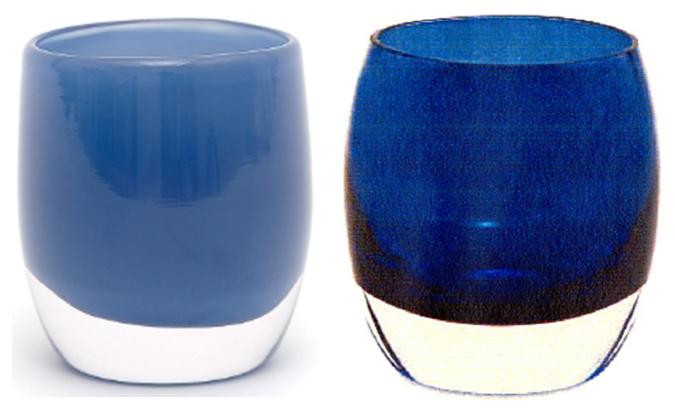 Glassybaby’s (left) and a defendant’s votive candle holders
Folks may remember that local candle holder designer Glassybaby, LLC, filed trade dress claims against competing designers in April (STL post here).
On June 6, Western District Judge Marsha Pechman dismissed those claims. In short, she found they weren’t adequately pleaded in plaintiff’s complaint.
The court wrote that “Defendants argue that the complaint fails to identify the mark or illustrate the so-called distinctive design. Plaintiff’s complaint states that the hand-blown glass containers are distinctive, but it does not describe the design in any detail. It is not possible to determine what the features of the votive candle holders are and whether they are functional or non-functional. This is not adequate to satisfy Rule 12(b)(6). Plaintiff must plead with at least some detail what the purported design is and how it is non-functional.”
The court similarly dismissed plaintiff’s dilution and Consumer Protection Act claims. However, it granted plaintiff leave to attempt to correct its pleading deficiencies in an amended complaint.
The case cite is Glassybaby, LLC v. Provide Gifts, Inc., No. 11-00380 (W.D. Wash. June 6, 2011) (Pechman, J.).
Michael Atkins
in Dilution, Functionality, Seattle Updates, Trade Dress, Trademark Infringement
|
Post a Comment
| Email
| Print
Glassybaby Sues Candle Holder Sellers for Trade Dress Infringement
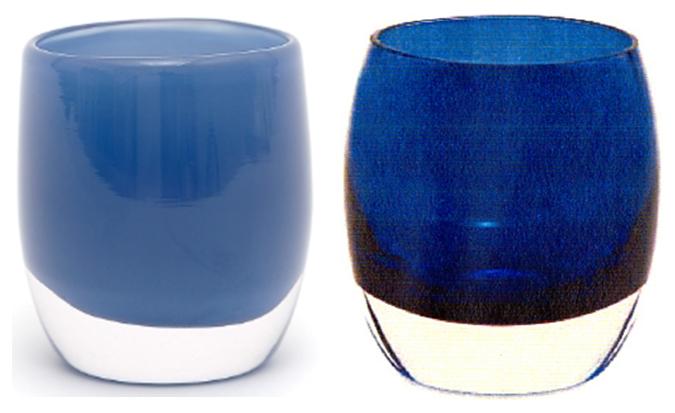 Plaintiff Glassybaby’s (left) and defendant Northern Lights’ candle holders
Since I recently posted slides from my talk on trade dress, I thought it was timely someone filed a product design claim in the Western District.
In March, Seattle-based Glassybaby, LLC, brought suit against competing candle holder seller Provide Gifts, Inc., d/b/a Red Envelope, and manufacturer Northern Lights Enterprises, Inc.
Glassybaby does not describe its trade dress (depicted above), but claims it is distinctive and that its designs are recognized by the consuming public as coming from plaintiff. It asserts claims for trademark infringement, dilution, dilution under Washington’s antidilution statute, and unfair competition.
Defendants have not yet filed an answer.
The case cite is Glassybaby, LLC v. Provide Gifts, Inc., No. 11-380 (W.D. Wash.).
Michael Atkins
in Seattle Updates, Trade Dress, Trademark Infringement
|
Post a Comment
| Email
| Print
Tidbits from Spain
Two trademark tidbits from my recent trip to Spain.
First, I wouldn’t call it a full-blown trademark safari, but I did come across this restaurant in Barcelona. The Tarantino pizza restaurant with images from Quintin Tarantino’s movies probably wouldn’t fly in the States — unless, of course, Mr. Tarantino owned the restaurant or agreed to be associated with it.
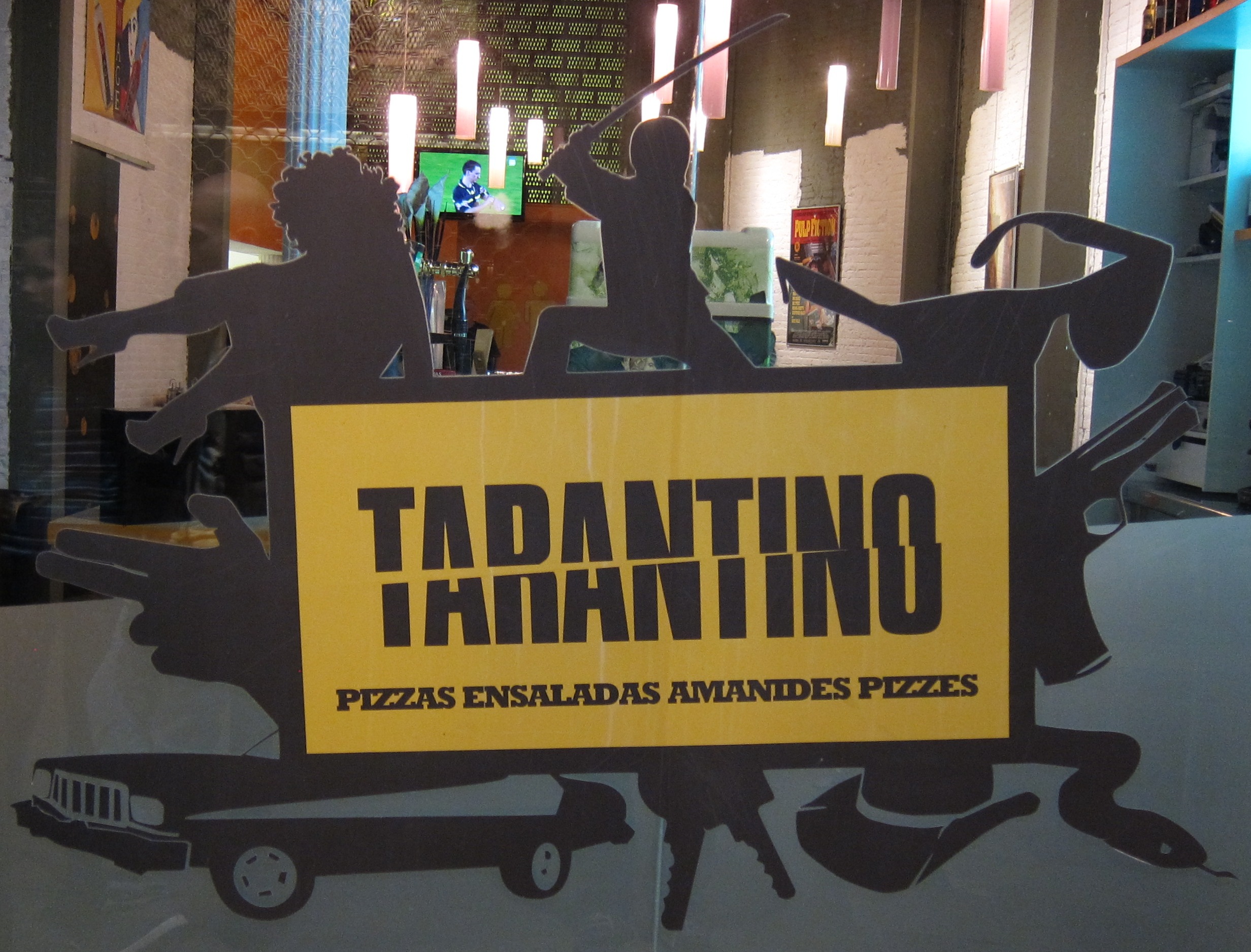 Not exactly Jack Rabbit Slim’s: Barcelona’s Tarantino pizza restaurant.
Gotta love the soccer game on TV in the background. (Photo by STL)
Second, here are the slides from my presentation on trade dress protection of software at the Transnational IP Seminar — geared to American and European law students interested in patent law, jointly produced by the University of Washington’s Center for Advanced Study and Research on Intellectual Property and the University of Alicante’s International Project on Intellectual Property and Information Technology.
Spoiler alert: if it’s not evident in the slides, trade dress protection of software is thin. You’re better off protecting your work through copyright or a design patent, assuming you qualify for such protection.
Michael Atkins
I noticed the upload of my presentation to SlideShare caused some problems, including the bullet numbering in Slide Nos. 9 and 22. I fixed some but didn’t catch others. Minor points, but it’s SlideShare’s fault, not mine!
Michael Atkins
in Trade Dress, Trademark Infringement
|
1 Comment
| Email
| Print