
Entries in Trade Dress (53)
First Amendment Protects Grand Theft Auto Against Trademark Infringement
The First Amendment protects the makers of the Grand Theft Auto: San Andreas video game against claims of trademark infringement, the Ninth Circuit found Nov. 5.
In E.S.S. Entertainment 2000, Inc. v. Rock Star Videos, Inc., the owner of the Play Pen strip club sued the video game maker that allegedly depicted the club and its trademark in its fictional version of Los Angeles called “Los Santos.” In the game version, the club is called the “Pig Pen” (depicted below).
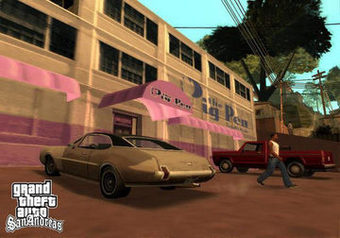
The artists who developed the game took inspiration from photographs of the Play Pen but used photos of other East Los Angeles locations to design other aspects of the fictional “Pig Pen.”
In 2005, E.S.S. filed suit in the Central District of California for state and federal trade dress infringement and unfair competition. The heart of its complaint was that Rock Star used its logo and trade dress without authorization and created a likelihood of confusion among consumers as to whether E.S.S. endorsed or is associated with the game.
Rock Star moved for summary judgment, arguing in pertinent part that regardless of whether it infringed E.S.S.’ trademark rights, the First Amendment protects it against liability.
The district court granted the motion (in a 55-page opinion), and E.S.S. appealed.
Applying the “Barbie Girl” case of Mattel, Inc. v. MCA Records, Inc., 296 F.3d 894 (9th Cir. 2002), which protected MCA’s right to publish a song with Mattel’s BARBIE trademark in its title, the Ninth Circuit affirmed.
The court noted that “ESS argues both that the incorporation of the Pig Pen into the Game has no artistic relevance and that it is explicitly misleading. It rests its argument on two observations: (1) the Game is not ‘about’ ESS’s Play Pen club the way that ‘Barbie Girl’ was ‘about’ the Barbie doll in MCA Records; and (2) also unlike the Barbie case, where the trademark and trade dress at issue was a cultural icon (Barbie), the Play Pen is not a cultural icon.”
The court acknowledged these factual differences but found they missed the point. “Under MCA Records and the cases that followed it, only the use of a trademark with ‘no artistic relevance to the underlying work whatsoever’ does not merit First Amendment protection. In other words, the level of relevance merely must be above zero. It is true that the Game is not ‘about’ the Play Pen the way that Barbie Girl was about Barbie. But, given the low threshold the Game must surmount, that fact is hardly dispositive. It is also true that Play Pen has little cultural significance, but the same could be said about most of the individual establishments in East Los Angeles. Like most urban neighborhoods, its distinctiveness lies in its ‘look and feel,’ not in particular destinations as in a downtown or tourist district. And that neighborhood, with all that characterizes it, is relevant to Rockstar’s artistic goal, which is to develop a cartoon-style parody of East Lost Angeles. Possibly the only way, and certainly a reasonable way, to do that is to recreate a critical mass of businesses and buildings that constitute it. In this context, we conclude that to include a strip club that is similar in look and feel to the Play Pen does indeed have at least ‘some artistic relevance.’”
Commentary on the appeal from Eric Goldman here, and on the underlying district court decision from the Gamasutra here.
The case cite is E.S.S. Entertainment 2000, Inc. v. Rock Star Videos, Inc., __ F.3d __, 2008 WL 4791705, No. 06-56237 (9th Cir. Nov. 5, 2008).
 Michael Atkins
in First Amendment, Trade Dress, Unfair Competition
|
Michael Atkins
in First Amendment, Trade Dress, Unfair Competition
|
 Post a Comment
|
Post a Comment
|  Email
|
Email
|  Print
Print
STL Weekend Update - Developments in Peso's, Hendrix Electric Trademark Cases
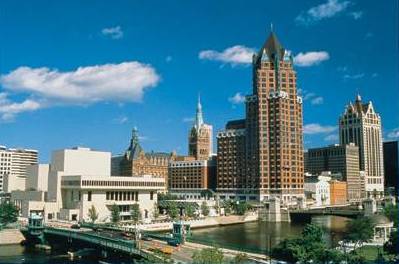
Apologies for the blogging slowdown. I’ve been in depositions in the cool (and I do mean cold) city pictured above, and will return on Tuesday for more. (Hint, it’s where Seattle’s last professional sports team was moved before the Sonics went to Oklahoma City.)
That said, there are two recent developments worth noting. First, one of the attorneys in the Peso’s v. Matador restaurant trade dress case filled in some of the settlement terms foreshadowed here. The highlights reportedly are as follows:
- The Matador’s Ballard location will make certain interior changes (including to its walls, ceiling, and suspended acoustic panels). The location will remove all votive candle sconces from its walls, table tops and bar tops. It also will remove all Day of the Dead figurines (including those made from wood, paper mache, and pottery).
- All Matador locations within the State of Washington will change the colors of their table top menu holders, change certain menu descriptions, and stop using two particular menu titles.
- Owners of the Matador will not open any locations for three years in the Seattle area bounded by 80th Street to the north, Spokane Street to the south, Lake Washington to the east, and Puget Sound to the west. For the same time period, the Matador also will not open within a four-mile radius of Bellevue’s Lincoln Square (excluding Issaquah to the extent that city falls within those parameters).
- Owners of the Matador will pay the owners of Peso’s $250k-$285k. If the parties cannot agree on the amount, King County Superior Court Judge Catherine Schaffer (the trial judge) will set the amount.
- Should any dispute arise in drafting or implementing the final settlement agreement, King County Superior Court Judge John Erlick (who helped broker the settlement) will decide the issue.
The other item of interest is that on Oct. 16, the Western District entered a Judgement and Permanent Injunction against the makers of Hendrix Electric vodka. The order was no surprise given Judge Thomas Zilly’s August 7 finding on summary judgment that the company had infringed Experience Hendrix, LLC’s AUTHENTIC HENDRIX, EXPERIENCE HENDRIX, and JIMI HENDRIX trademarks.
The injunction is sure to put a crimp in the defendants’ marketing efforts. Among other things, it permanently enjoins them from “using the words JIMI HENDRIX ELECTRIC, JIMI HENDRIX ELECTRIC VODKA, HENDRIX ELECTRIC, HENDRIX ELECTRIC VODKA; and the design headshot containing JIMI HENDRIX ELECTRIC or HENDRIX ELECTRIC, both with and without Jimi’s signature, in the sale, offering for sale, distribution or advertising of posters, clothing, and alcoholic beverages including vodka.”
The chance of appeal? Given the Hendrix family’s penchant toward litigation, I’d say about 100%.
Photo credit: here.
Michael Atkins
in Seattle Updates, Trade Dress, Trademark Infringement
|
Post a Comment
| Email
| Print
Peso's and Matador Settle "Restaurant Wars" Trade Dress Case
Owners of Peso’s and the Matador restaurants have settled their trade dress and unfair competition case, a lawyer involved in the trial told me today. (Last STL post on the case here.)
But darn it, the Seattle Weekly scooped me with this post.
I understand the terms were read into the court record but I don’t yet know what they are. The Matador’s lawyer apparently told the Weekly that at least some money will change hands and that the parties are still working out the details.
I’m sure they are.
Michael Atkins
in Seattle Updates, Trade Dress, Unfair Competition
|
Post a Comment
| Email
| Print
Update in Ongoing Peso's v. Matador Trade Dress Trial
On Friday, I talked with one of the lawyers representing the owners of Peso’s in their claims against the owners of the Matador in Seattle’s restaurant wars trade dress trial. (Most recent STL post on the case here.)
Here’s an update:
- The case is about halfway through the expected six-week trial. Peso’s should be done with its case-in-chief soon — on approximately Oct. 16.
- Trial is not scheduled this week because King County Superior Court Judge Catherine Shaffer will be attending a judicial conference.
- The parties have agreed to a mutual dismissal with prejudice of the parties’ dilution claims and counterclaims. This resulted in part from the trial proceeding without a jury, so that any remedies allowed under Washington’s dilution statute will be based on the court’s view of fairness and equity. The remedies also appeared no different to the parties than those available under their other claims and counterclaims.
- The parties have agreed to a mutual dismissal with prejudice of all claims and counterclaims involving four non-owners of Matador’s Washington restaurants, including an artist who designed the ironwork in both Peso’s and the Matador. In addition, Peso’s and one of the metal works artists have agreed to resolve a breach of contract claim in which the artist will deliver to Peso’s some unfinished metal work.
- The case now consists of five claims: (1) common law trade dress; (2) common law unfair competition; (3) unjust enrichment; (4) violation of Washington’s Consumer Protection/Unfair Business Practices Act; and (5) violation of Washington’s Uniform Trade Secrets Act. The Matador also has a number of affirmative defenses and counterclaims still pending.
- Peso’s trade dress claim is that the trade dress of the first Matador restaurant in Ballard so resembled the trade dress of Peso’s that actual consumer confusion, mistake, or deception occurred with respect to the source or origin of such trade dress, and that the later three Washington Matador restaurants also resembled the first Matador so as to cause likelihood of confusion, mistake or deception as to their source or ownership with respect to Peso’s. The trade dress claim concerns the overall impression of the ordinary consumer resulting from alleged similarities in the restaurants’ ornamental ironwork, wooden tables, in-laid tables, curved booths, curves in bars, slats in bars, wall treatments, trim and ceiling colors, suspended acoustic panels, lighting, use of votive candles, table-top happy-hour menus, entree and dinner menus, and other decorative elements.
- The parties have briefed and the court will decide what standards apply to trade dress claims under the common law of Washington.
- The court has stated that the U.S. Supreme Court case of Two Pesos v. Taco Cabana does not control because it was based on the Lanham Act and not Washington State common law, though the court found that policies underlying the case are helpful — particularly with respect to the Washington trademark and trade dress common law policy of protecting consumers.
- The Matador has announced its intent to bring motions to dismiss Peso’s remaining claims. The parties are expected to argue such motions on or about Oct. 16, at the close of Peso’s case, and before the Matador presents its case.
Note: because I just wanted to provide a factual summary of what’s been happening in trial — and not to give the parties the opportunity to fight their case out in this blog — I did not seek comment from the Matador’s side. Hopefully, this summary accurately characterizes the first three weeks of trial and what lies ahead in the next three weeks. Though I’ve visited both restaurants, I’m not choosing sides on this one.
In related news, the Ballard News Tribune recently wrote about the case and quoted me discussing basic principles of trade dress law.
Michael Atkins
in Seattle Updates, Trade Dress
|
Post a Comment
| Email
| Print
From Two Pesos to Peso's: More Local Press on Tex-Mex Trade Dress Suit
The local press is loving the restaurant trade dress war that’s being played out this week in King County Superior Court. The case pits the owners of Peso’s against the owners of the Matador in what could be a Seattle re-telling of Two Pesos v. Taco Cabana.
Viewed another way, it’s Queen Anne versus Ballard! Now that’s a grudge match a long time in coming.
The Seattle Weekly’s Daily Weekly blog has blow-by-blow courtroom drama from Tuesday, and the Seattle Post-Intelligencer devotes a column to the fracas.
Not to be outdone, STL has posted stories here, here, and here.
STL’s next post on the subject? The winner! The loser! The drama!
Michael Atkins
in Seattle Updates, Trade Dress
|
2 Comments
| Email
| Print